
This article was posted originally on August 4, 2014. After receiving some comments from a friend I decided to revise it and post an updated version. I also suggest that you check out the article I posted on July 21, 2014 entitled “Boxes or Barrels.” Loel Handley was gracious enough to help me with this article and has a lot of experience in shipping 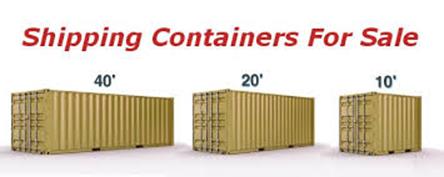 containers. Having retired from the Rail Road, he has experience not only in the shipping of containers, but also in the packing of containers for missionaries headed overseas. He helped me pack my container, and when I opened it up in Haiti, it looked like it did when we shut the doors in SC.
Once you are called to be a missionary, then what? There is a lot that goes into it from that point on. One of the big things that we as missionaries all have in common is how to get all of our stuff to the field. We have shipped items three different ways: by a container, by cargo plane, and by shipped boxes with a company. By far the easiest is the third option. This is not the fastest, but it was the cheapest also. We fly exclusively with Missionary Flights International, and they operate DC-3 cargo planes so we are able to fly along beside our cargo. While our cargo arrives the same time we do, we have to pay Missionary Flights International $1.60
 per pound plus customs at the airport in Haiti. So that can get expensive, but it is nice to have your clothes arrive with you. The third option I mentioned is a long drawn out fighting process.
Containers come in different sizes. Some important things to remember is that the container must be a dry container, and it must be certified by the US Coast Guard to be sea  worthy to ship on a cargo ship. They come in 10′, 20′, 40’sizes which are rated Standard or HC (High cube). HC allows for an extra 300 cubic feet more than a standard container (by the way the abbreviation symbol for foot or feet is the apostrophe sign [‘] and inches is the quotation mark [“]). Basically a 20′ container has 1172 cu. ft. of interior space. The actual interior measurement of a 20′ container is 19’5″, and a 40′ container measures 39’5”. All containers are basically the same width because of road widths and trailer chassis. More importantly is that they interlock on the corners with each other. This means that two 20′ containers can stack on one 40′ container or vice versa. Once they are locked together they cannot be pulled apart. There is a 48′ container, but it is nothing more than a 40′ container with a 4’ extension on each end. The floor is usually wood which makes it easy to nail or screw down supports. Door widths and openings are pretty universal.
If you have ever been behind a truck hauling a container, you will notice that it has written in the upper right hand corner of the container a 4 letter identification followed by a number. For example PVTU is commonly used for private containers. APLU is a container owned by American President Lines. JBHZ is a trailer owned by J. B. Hunt trucking Co. Guess who owns UPSZ trailers? That’s right United Parcel Service. The “U” on the end indicates that it is a container for a boat or a flat rail car. If it ends in “Z” it is a trailer that has fixed wheels and can go on a boat or flat rail car. There is a total weight limit on the contents, but everything you pack is not counted by weight so much as it is counted by cubic feet. Cars and trucks are often shipped in containers. The last container we shipped was packed half with stuff, and then Loel built a wall to restrain everything in order to leave room for a truck in the last half.
Some friendly advice for you is take a few minutes and search around on Wikipedia about shipping a container to familiarize yourself with the terms you will be hearing. I would start with the term bill of lading. When you go with a shipper they can give you all the information you need, but it is helpful to know what they are talking about ahead of time. A list of contents is not necessary when moving by rail; you can simply put “FAK” freight of all kinds. That generally is the cheapest way. For foreign countries by boat, they usually want a detailed manifest listing the contents. For example instead of listing each item in each box, you can put 8 boxes of donated used household items, 3 boxes of used clothes and so on. The idea is to be general but NOT deceptive. If you have any large items, you will need to list that separate. A generator will need to be listed by wattage and emptied of gas/diesel and oil. Vehicles require a different set of paper work. Your shipper may require separate paperwork and so might the country you are shipping to. Your shipping agent, or broker, will be able to walk you through the process. Be sure to ask for clarification when terms or phrases are used that you do not understand.
Other costs to consider are the cost of getting the container where you want it to go. Your freight cost is to the port only unless you pay for what is normally called “door to door” service. Be sure to ask your shipper ahead of time if this is available. Sometimes you only have a limited amount of time to pack the container and then the transporter starts charging by the hour, so plan on having a lot of help. Customs, duty, and declaration fees in the destination country can be a nightmare of a headache. Depending on the country, the process could take up to a month or longer. I have heard of missionaries spending 7 months trying to get a container out of customs. Another hidden cost is storage fees. Normally the port allows you a certain number of days to work your container through customs, and then they charge a daily storage fee. I got hit with this one with a 40′ container that two other missionaries and I sent to Haiti. They began counting storage fees from when the boat arrived, not when the  container touched the ground. Also be sure to spend the extra money and get the insurance!!! We have a missionary with our board that had a bad experience as a result of having no insurance. The shipper mixed up some numbers, and the missionaries got a container filled with barrels of chemicals, and their stuff was sent to another country. They lost it all because they did not have insurance.
Something else Loel reminded me of is to be sure and get names and numbers for people with the shipping company on both shipping and receiving sides. When you get to your country you want to be able to walk in to an office and ask for a specific person. I speak from experience and add a hearty AMEN there. While other people were standing in a long line, I asked for a specific person and was taken straight to an office and given my paperwork and receipts needed to start the process of getting my container through customs.
Packing a container is a major undertaking. Every nook and cranny must be filled. If not it will be by the time it reaches its destination. Dresser drawers should not be left open but filled with clothes. Towels can be used as packing material to protect breakables. Try to find as many of the same size boxes as you can to make it easier. I encourage you to check out our post entitled Boxes or Barrels for more information. The “extra” room at the top can be used for building materials or mattresses. I shoved a 30′ extension ladder on top of everything once. DO NOT put anything that can be damaged by the heat if you will be shipping things in the summer. Ports are outside and no shade. If your container ends up on the top of the stack it is sitting in full sunlight and maximum heat! Containers are rough handled and MUST be blocked and braced very well. If not when you open it up you could end up with a bunch of junk. Last but not least, buy a few strong lock to lock up the container and keep the keys in your possession.
To pack this all in to a conclusion, if you are reading this and thinking that it is a breeze, go find someone who has done this before and ask for their help or advice. Weigh it out and see if it is cheaper to buy some of your stuff in the country you are going to. It might save you money and frustration. If I can help you in any way, please contact me. hgpeart3@gmail.com
Serving Jesus,
HGP3

 Missionary Hindsights
Thank you so much for your advice, it is very helpful .We have a orphanage in Haiti and we are shipping a container there. I do have a question if you could be so kind as to give me some advice . My largest question is do you recommend I have a person there in Haiti to help get our container out of costumes ? If so do you have a contact that you recommend I use ? Also do you have container shipper that you would recommend .
LikeLike